Buying guide
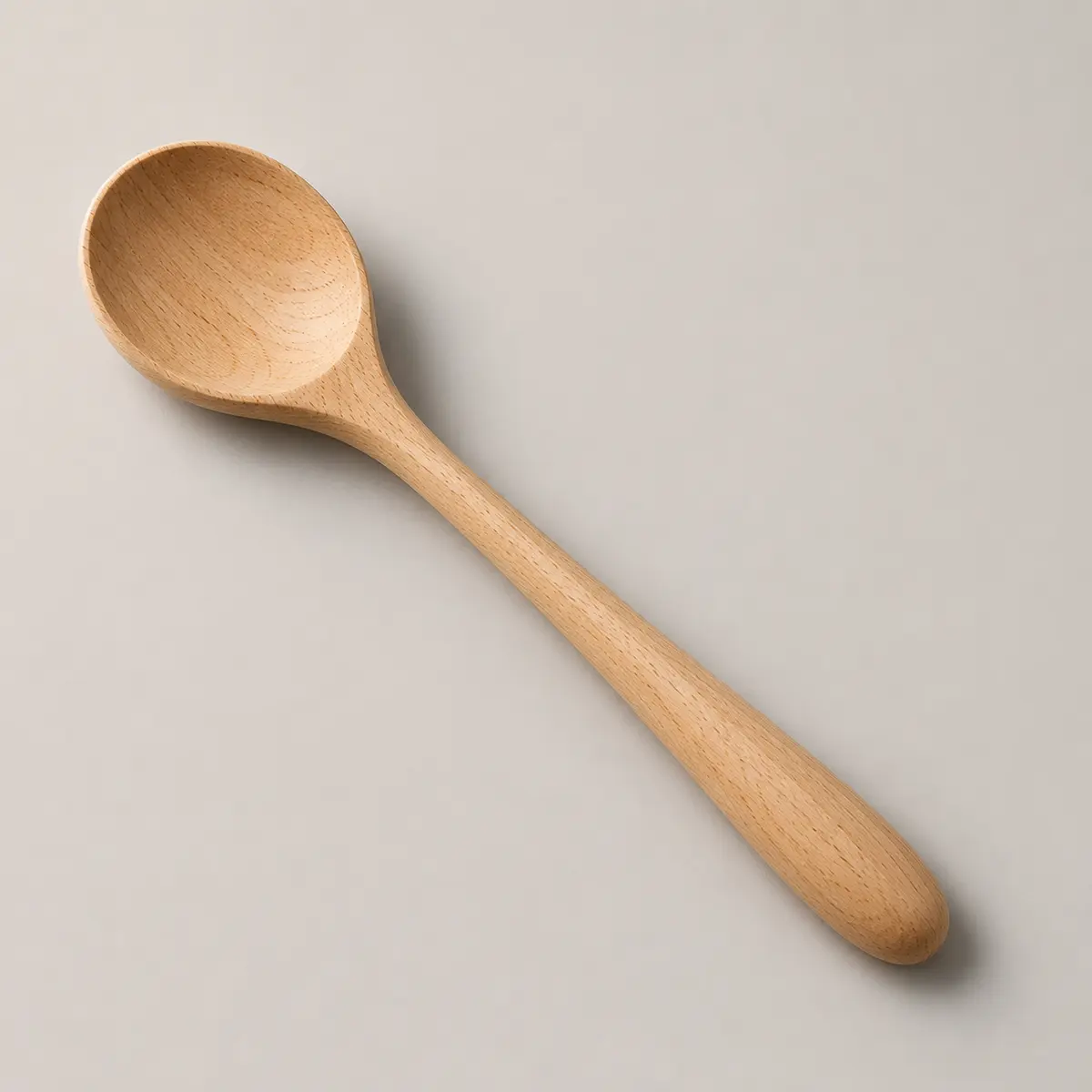
The bowl and handle of a wooden cooking spoon
The spoon in the illustration is carved to a shallow oval at one end, with a long narrow handle at the other. The wood grain follows both parts, and the bowl has a rounded lip.
If you mostly stir soups, look at the curve where the bowl meets the handle. A spoon with a shallow bowl is a different choice from a deep ladle for transferring a whole serving.
Match the spoon to your deepest pot
Take out the pot in which you most often make soup. Put a spoon you already use inside it and note how much handle projects above the rim while the bowl touches the bottom. Try the same exercise with the pot on an unheated hob so you can see your normal stirring angle. Compare the useful length you need with the spoon’s stated length when that measurement is available.
Stirring a sauce in a smaller pan
A broad stirring circle works in a stockpot, while a saucepan may leave much less space for the bowl to turn. Use your current spoon to see whether you can move it along the sides and across the base without tipping it onto its edge. For checking the texture of a sauce, a shallow spoonful may be enough. For portioning soup into bowls, leave room in the utensil drawer for a ladle.
Plan for washing and storage
Decide where a wet wooden utensil will rest after washing. A narrow jar may suit dry utensils but offer little room around a spoon that is still drying. A rack or open draining area lets you see both sides before putting it away. Check the maker’s care instructions before soaking, oiling or machine washing an actual spoon. The preview identifies a wooden cooking spoon but does not specify its finish or care treatment.
Where to rest it between stirs
Put your usual spoon rest beside the hob and check the length it supports. With a shallow bowl and long handle, a rest that is too short can leave the handle across another utensil. Try the position before heating a pan. Look for space to set the spoon down and pick it up without reaching across a burner.