Buying guide
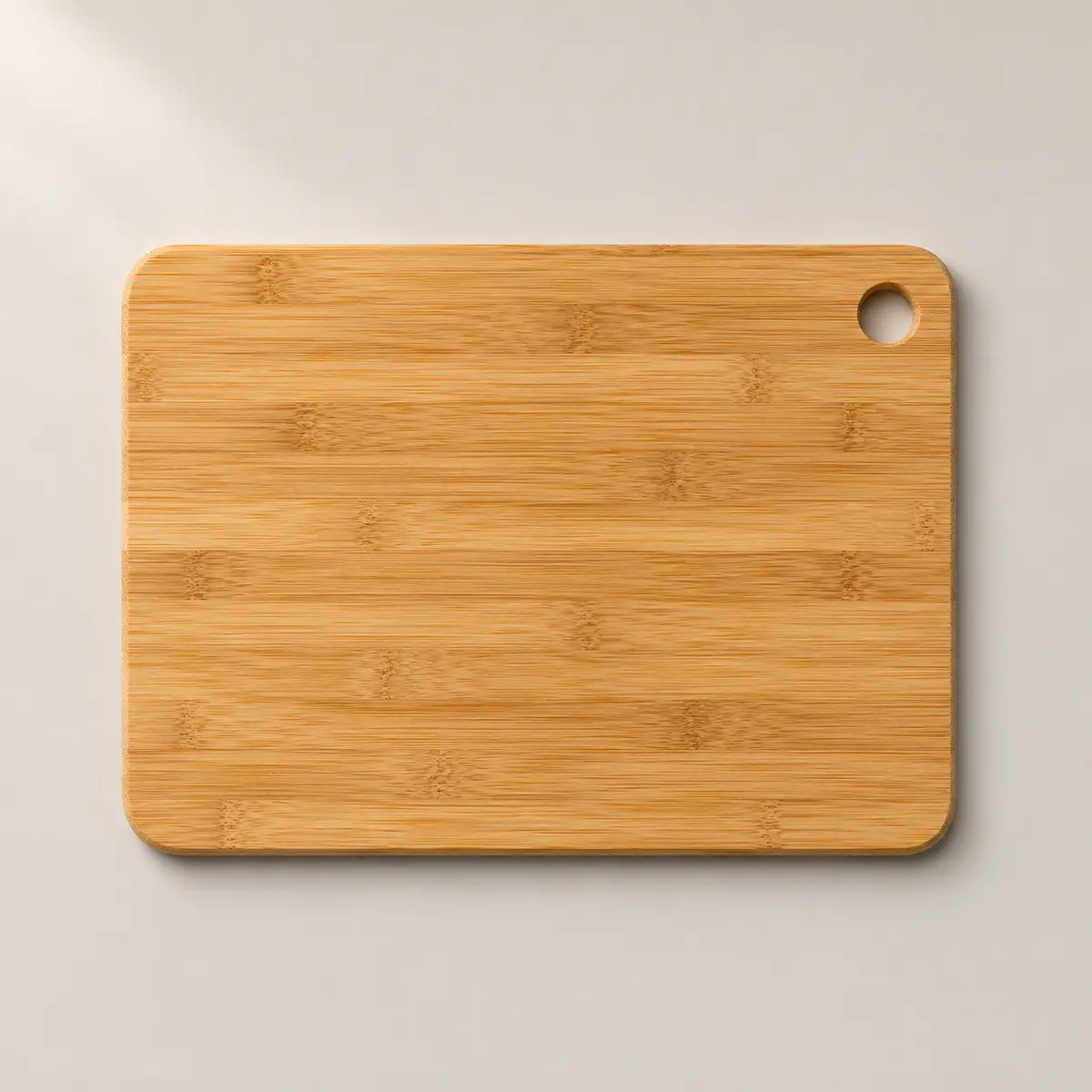
A flat board with a corner hanging hole
The bamboo cutting board shown here has a rectangular outline, rounded corners and a visible grain running across its face. A round hole sits near one corner. The illustration gives a clear view of the working face, while the reverse side and the edge thickness are outside that view.
Use the overhead shape to think about your preparation space, then look for measurements before deciding how much room the board offers.
Size the surface for one familiar recipe
Choose a dish you prepare regularly. For a vegetable soup, for example, think about where you put the onion while slicing carrots and where the chopped pieces wait. Arrange those ingredients on your current board without cutting anything. The remaining clear space is often more informative than the length of the longest vegetable. Measure the area you actually use, including room around your knife hand and a place for trimmings.
Fit the kitchen as well as the ingredients
A larger chopping surface still has to fit between the sink, hob and any appliances that stay on the counter. Measure that uninterrupted area and check whether the whole board can rest on it. Then measure the inside of your sink or your usual washing area. If you plan to stand the board on edge afterwards, allow enough clearance under shelves and enough space for it to dry.
Will the corner hole suit your storage?
If you intend to hang the board, compare the hole’s eventual diameter with your hook and measure the diagonal clearance where the board would hang. A rounded corner will sit differently there from a board suspended at the middle of an edge. For drawer storage, thickness may matter more than the hole. Check thickness, weight, care guidance and both face measurements on the finished item before choosing between those storage arrangements.
Leave a route for chopped ingredients
Put an empty mixing bowl or frying pan beside the board-sized outline on your counter. Try transferring a handful of chopped ingredients from the middle into that vessel with a spoon. This shows whether you prefer to work parallel to a long side or face a shorter side, which can change the dimensions that suit a narrow counter.