Buying guide
Look at the rim, ribs and base
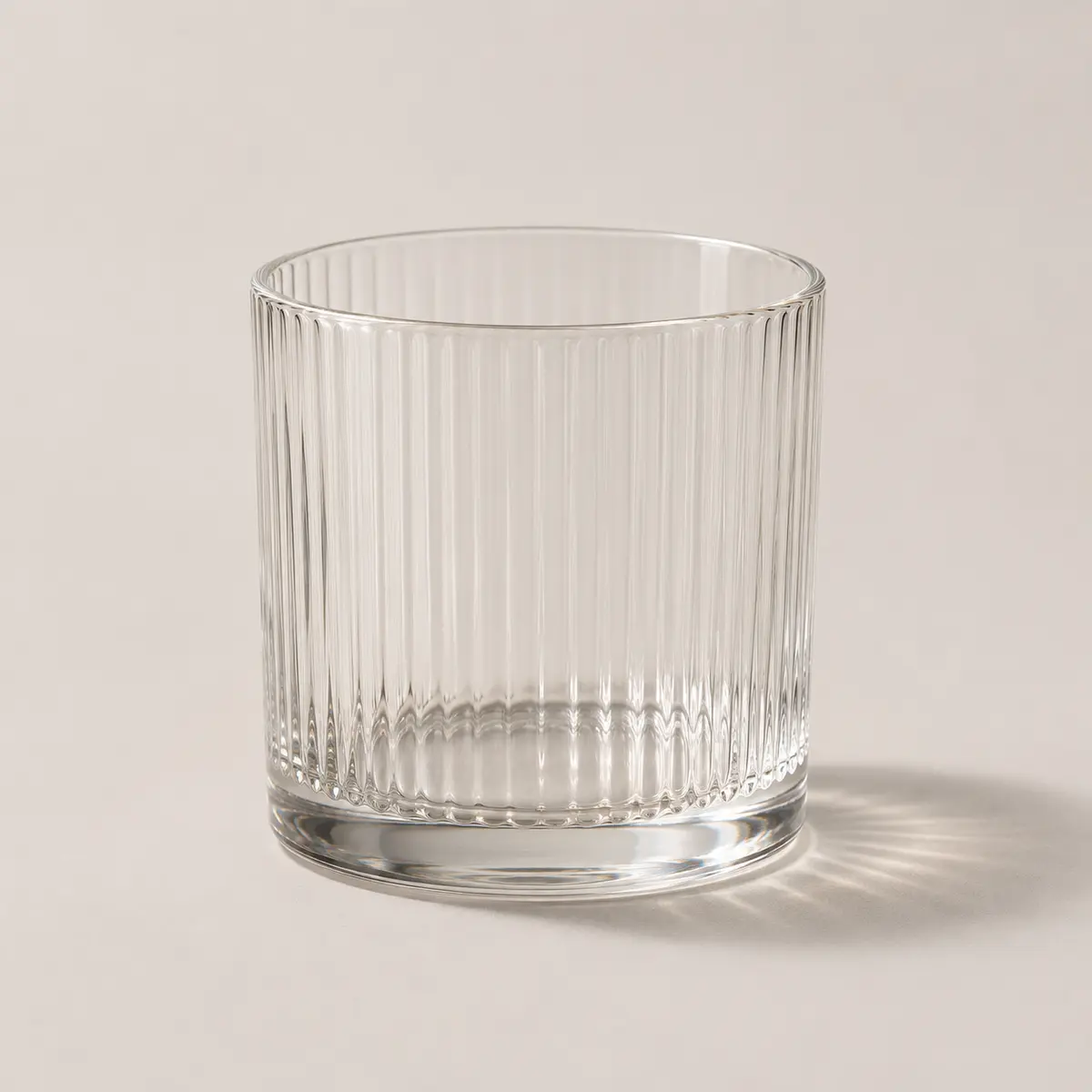
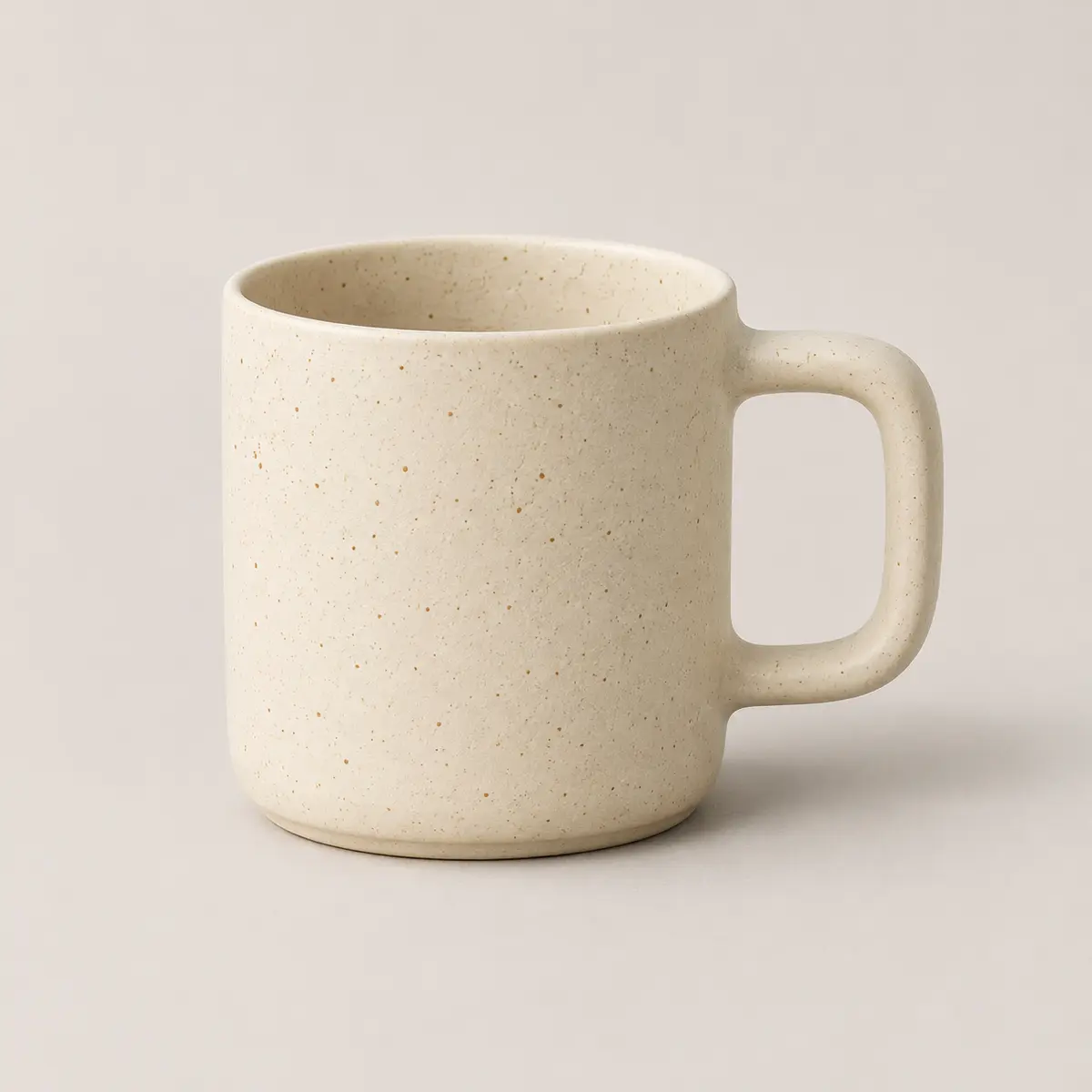
This preview shows a short, clear drinking glass. Vertical ribs run closely together down the sides and end above a smooth band at the base. Light catches the repeated lines down the sides, while the rim looks smooth.
When comparing ribbed tumblers, look first at where that pattern ends. It changes the appearance of the glass beside cutlery and plates even when the outline is simple.
Choose a serving, then a glass
A low tumbler can serve different portions depending on its diameter. To estimate what you need for water at a place setting, pour the amount you normally drink into a measuring jug. For juice with ice, put the ice in your current glass first, then add your usual serving. Compare both uses with the stated capacity of any glass you are considering. The wide-looking mouth in this illustration does not establish its volume.
Make room at each place setting
Set a dinner plate, side plate and fork on a placemat, then try placing your current glass where a guest could reach it. Measure the free circle there, including a little space to pick the glass up. If you serve several people, repeat that arrangement on the narrowest side of the table. For a small shelf or tray, compare the glass’s maximum diameter with the available space across a full row.
Decide how your glasses will be put away
If you store tumblers upright, shelf height and base width are the dimensions to look for. If you nest them, check whether the particular glasses are designed to stack before planning around that arrangement. Similar-looking ribbed glasses can have different wall shapes. The preview illustrates one glass. Pack quantity, stacking guidance, dishwasher suitability and the measurements needed for your shelf are separate details to confirm when buying.
Compare the contact point on a tray
Check the surface on which a tumbler will rest, especially if your serving tray has a raised pattern or a sloping edge. Outline the flat part of the tray and place circles the size of your current glass bases inside it. You will see how many can be lifted separately without reaching across another glass.