Buying guide
Reading the shape of a table carafe
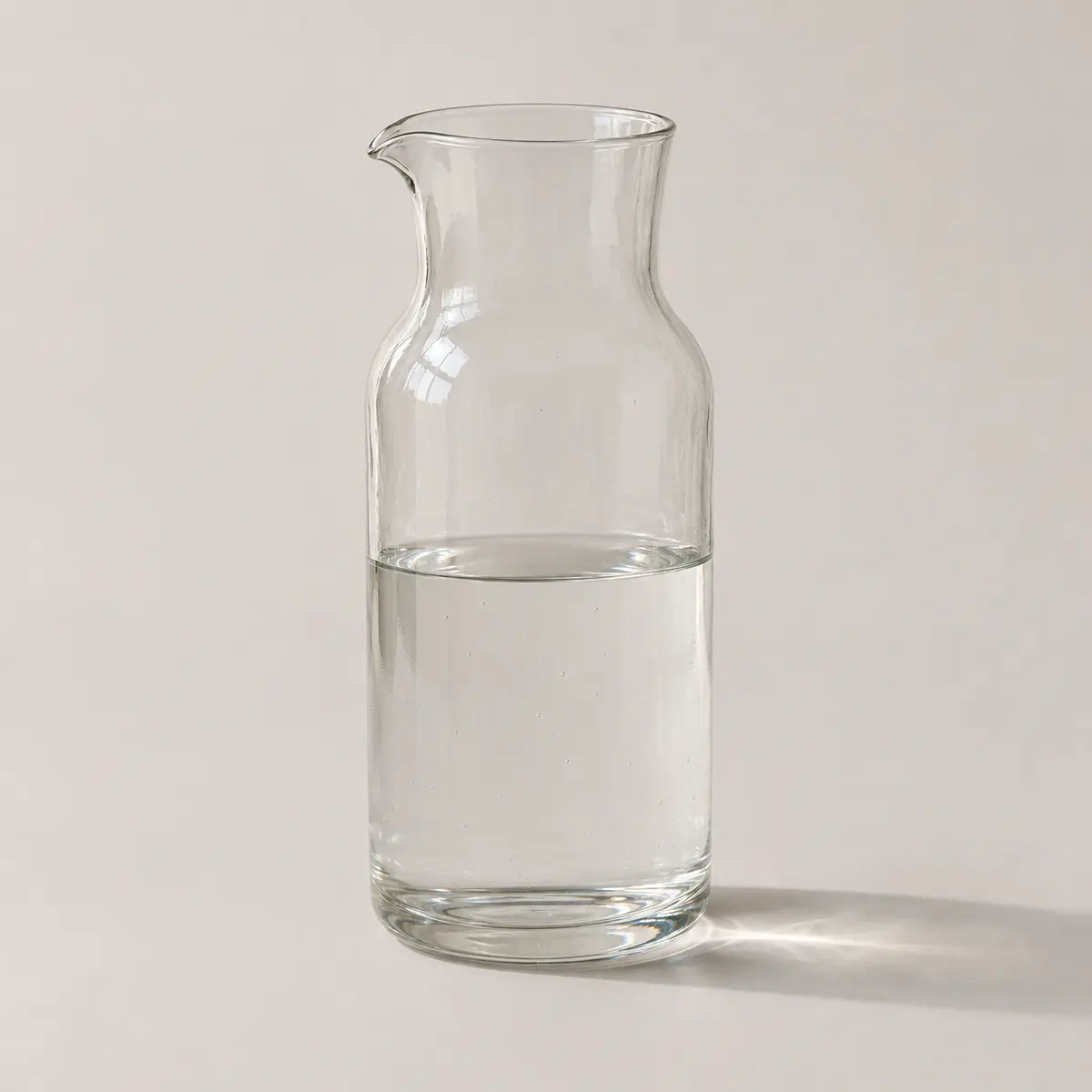
In the preview, the clear glass body stays cylindrical for most of its height, narrows at the neck and opens into a small pouring lip. You can see the water level through the side.
That makes this a useful shape to consider for a shared table where someone across from you might want a refill. The picture also gives you a side view of the lip, an important detail to compare between carafes.
Work backwards from the glasses you fill
Set out the glasses you usually serve with dinner. Fill one to a comfortable level, measure that serving and multiply by the number of people at the table. If you want a second round without a trip to the kitchen, count that too. Compare the total with a stated working capacity when available. The water level in an illustration is a styling choice and gives no dependable measure of volume.
Where will you pour and store it?
Try laying out your table with your largest serving plate in the centre. Allow room to lift a vessel, turn its lip towards a glass and set it back down without reaching over food. A glass body without a pictured handle also makes the circumference of the neck worth checking. For fridge storage, measure both the shelf height and the available depth behind the door rail.
Think about access through the neck
A narrow neck can influence how you fill and clean a carafe. Compare its stated opening with the tap, bottle brush or funnel you use at home. If serving iced water matters, check whether your usual cubes fit. The image shows an open mouth, so ask separately about a lid if you need covered storage. Capacity, neck diameter and care instructions would settle those questions for an actual purchase.
Reserve a place for refills
At a long table, two smaller serving points may be easier to reach than one large vessel in the middle. Lay out your usual number of places and check who would have to pass the carafe. This can change the capacity you look for, even when the total amount of water for the meal stays the same.