Buying guide
Read the front and back of the organizer
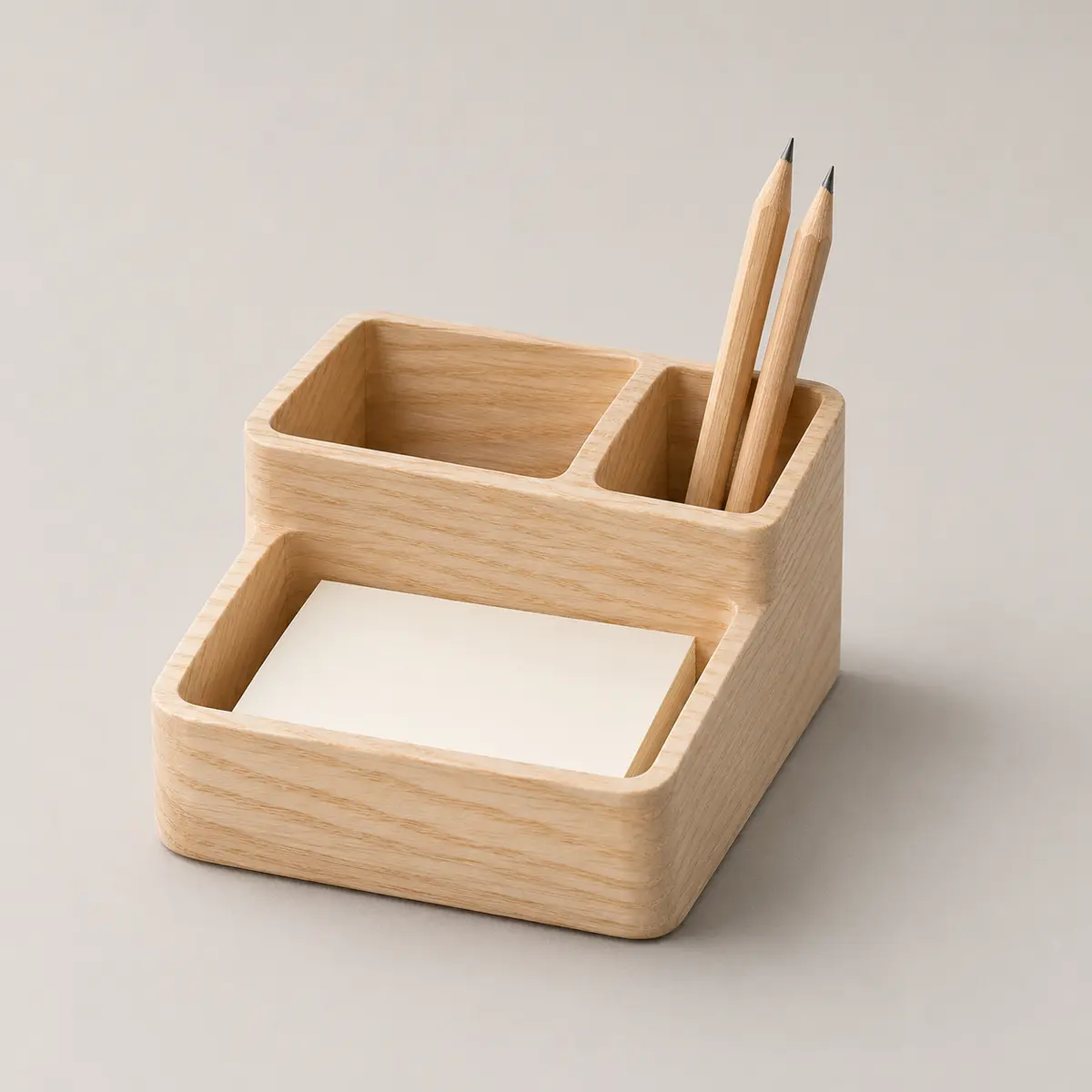
The illustrated wood-grain organizer has a shallow tray at the front and taller compartments behind it. A stack of blank notes sits in the tray, and pencils stand upright at the back.
The low front edge is the feature to look at if you often jot down a number or a reminder while working. It gives you a view of the paper edge rather than hiding it behind a tall wall.
Choose compartments by the movement of your hand
Make a small pile of the things you reach for during one call: a pen, a spare pencil and a few notes, for example. Put them where your hand naturally lands beside the keyboard. If you use paper first and reach for a pencil second, try the layout with paper in front. If you are left-handed, repeat the test on the left side of your desk before deciding where the organizer should go.
Measure the note pad inside the tray
Check the width and length of your usual note paper, including any backing card. Compare those measurements with the internal dimensions of the front compartment. External width includes the side walls and cannot settle whether a pad will lie flat. For the upright sections, measure the thickest tool you want to keep there. A pair of pencils in the illustration provides an example of use, without establishing capacity or included accessories.
Set it beside the keyboard, not in its way
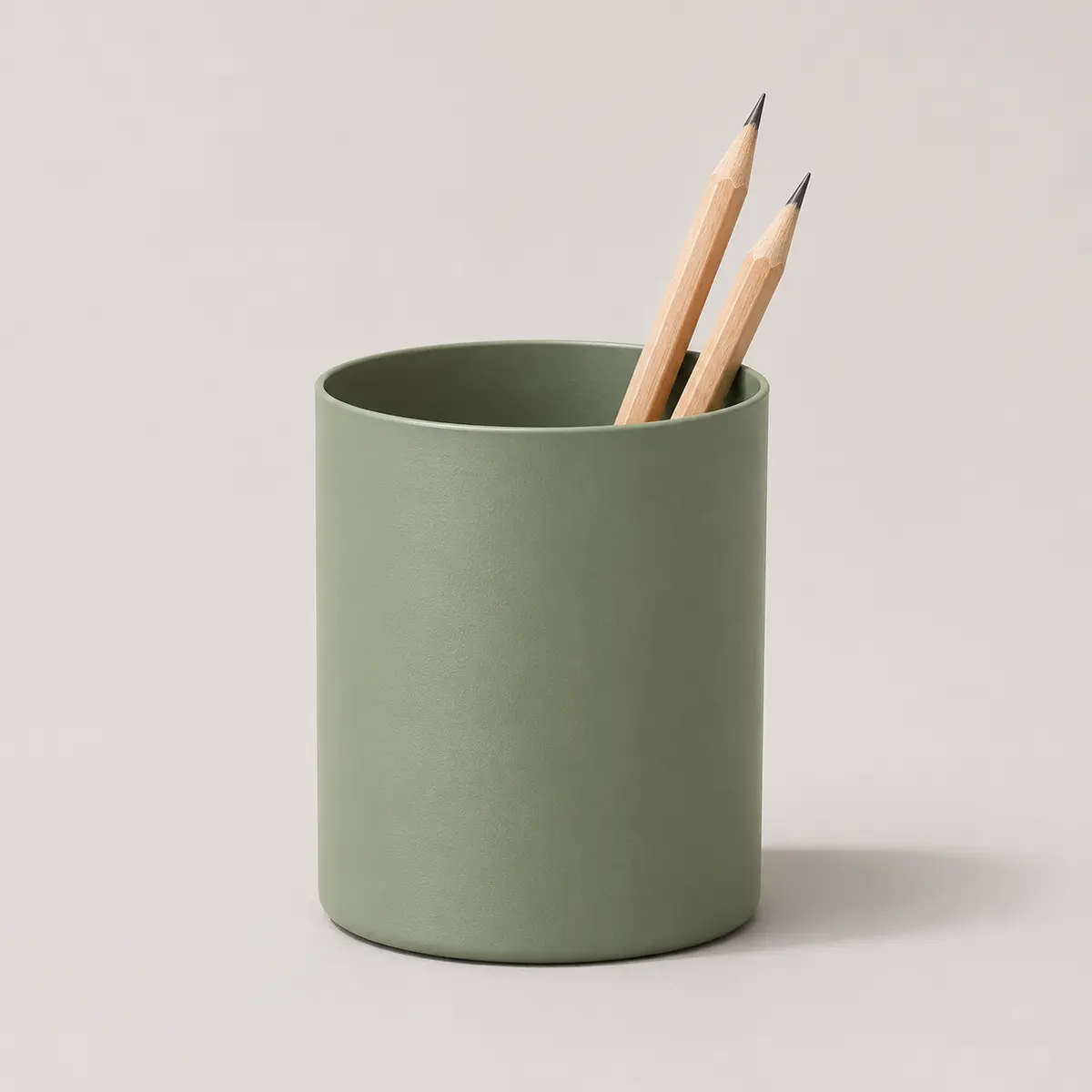
Mark a potential footprint with a sheet of paper and type a few lines at your usual pace. Open a notebook, reach for the mouse and see whether the footprint still leaves room to work. A divided organizer can be helpful when notes and writing tools need different spaces; a single pen cup takes a different approach if your paper already lives elsewhere. Final compartment sizes and the overall footprint would determine which suits your desk.
Loose notes or a bound pad
Decide whether you tear off a blank sheet before writing or write on the pad while it is still in its holder. For the second habit, the wall height can matter more than compartment width. Rest your hand on a pad with a low cardboard edge beside it and try writing near the bottom line.